What Are Carbon Crystal Wall Panels? Materials & Manufacturing
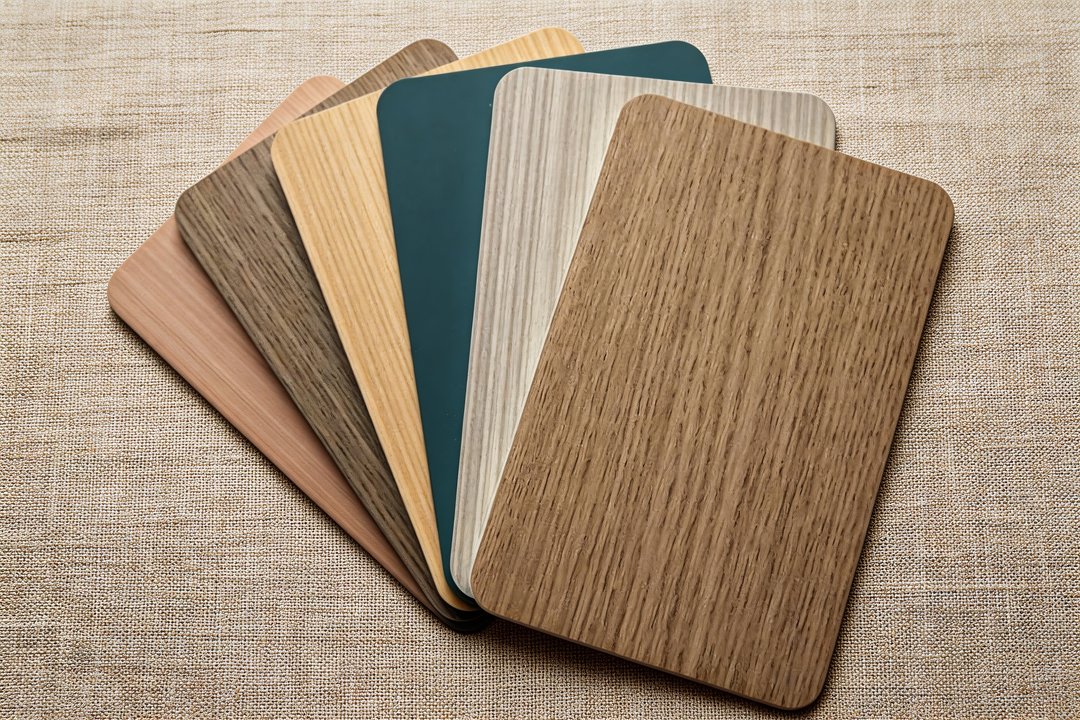
"Carbon crystal wall panel" is one of those product names that sounds like marketing until you actually open one up on the production line. It isn't carbon fiber, and it isn't a gemstone — it's a specific composite board construction that has largely replaced plain PVC sheet as the standard for decorative interior wall panels. We run this material through our own extrusion lines daily, so here's what's actually inside it and how it's made.
The Short Answer
A carbon crystal wall panel is a multi-layer composite board with a core made from bamboo-charcoal powder, calcium powder, PVC resin and fiber reinforcement, pressed and co-extruded at high temperature into a dense sheet, then finished with a decorative surface film. The "crystal" in the name refers to the dense, uniform cross-section the co-extrusion process produces — not a literal crystalline mineral.
What's Actually Inside the Core
The core is a thoroughly mixed and melted blend of four ingredients: PVC resin as the binding matrix, bamboo-charcoal or wood-fiber powder for density and a natural-material component, calcium carbonate powder as mineral filler for rigidity and cost efficiency, and fiber reinforcement to resist cracking under flex. This mix is melted and pressed under heat, producing a fine, uniform internal structure rather than the visible grain or voids you'd see in a solid-wood or particleboard cross-section.
How Co-Extrusion Actually Works
Co-extrusion means the panel's core and its two outer skin layers are formed in a single continuous pass through the extruder, rather than glued together afterward as separate pieces. The core is extruded first as the structural layer, and harder co-extruded skin layers are formed on the top and bottom simultaneously — those skins are what give the panel a harder, more scratch-resistant surface than the core material alone would provide. The continuous sheet is then cooled, cut to length, and edge-profiled with the tongue-and-groove click system before the decorative surface is applied.
Surface Finishing: How the Design Layer Gets Applied
The extruded blank is a uniform grey-brown composite — every wood grain, metal, mirror or stone pattern is added afterward as a surface layer, using one of three methods: cold lamination (adhesive-bonded film, most common for wood and fabric textures), hot lamination (heat-pressed film for a tighter bond and better scratch resistance), or a PET film layer for high-gloss, mirror and metallic finishes. Our catalog runs 8 surface families — wood, metal, mirror, stone, fabric, wave, satin and skin-touch — across more than 1,000 individual designs, all applied to the same underlying carbon crystal core.
Carbon Crystal vs. Bamboo Crystal vs. Standard PVC Sheet
Not every panel sold as "PVC wall panel" uses this construction — the term gets applied loosely across a range of very different builds. Here's how the three most common versions actually differ:
| Construction | Core Material | Density & Feel | Typical Thickness |
|---|---|---|---|
| Carbon crystal composite | PVC resin + bamboo-charcoal powder + calcium filler + fiber | Dense, rigid, minimal flex | 5 mm / 7.5 mm |
| Bamboo-charcoal composite | Higher wood-fiber ratio, same PVC/calcium base | Slightly warmer feel, comparable rigidity | 5 mm / 7.5 mm |
| Standard/recycled PVC sheet | PVC with minimal or recycled filler | Lighter, noticeably more flex | Often under 4 mm |
| SPC (for comparison) | Limestone powder + stabilized PVC | Very dense, stone-like rigidity | 8 mm |
The construction matters more than the marketing name on the listing — see our breakdown of why thin, underweight PVC sheet cracks where the standard-sheet version in this table typically fails first.
Specifications: Sizes We Actually Produce
Carbon crystal and bamboo-charcoal panels in our range ship in a fixed 1.22 m width and run 2.44 to 3.00 m in length across four standard length options, in 5 mm and 7.5 mm thickness grades (the latter also available in an anti-impact core for high-traffic commercial use). Every grade carries a B1 flame-retardant rating and 0% water absorption, with a typical service life of 20–30 years under normal indoor conditions.
Why Manufacturers Moved to This Construction
Plain PVC sheet is cheaper to produce but flexes, dents and yellows faster under UV and daily contact. The carbon crystal build solves three problems at once: the mineral filler adds rigidity without the weight of solid stone or SPC, the fiber reinforcement resists the cracking that gives thin PVC sheet its bad reputation, and the hard co-extruded skin takes a decorative film better than raw PVC would. It's effectively the mid-weight option between flexible PVC sheet and dense SPC — lighter and cheaper than SPC, more rigid and design-flexible than sheet PVC.
Honest Limits: Where This Construction Isn't the Right Fit
Carbon crystal panels are built for dry and moderate-humidity interiors — living rooms, bedrooms, offices, hotel corridors — not for constant direct water exposure. For bathrooms, shower surrounds and other wet commercial zones, our SPC line is the denser, more water-resistant choice at the same B1 fire rating. And like any PVC-based composite, carbon crystal panels aren't rated for sustained heat above roughly 60°C, so they shouldn't go behind unshielded heat sources or inside a sauna.
See the Full Surface Catalog
Tell us your target application and market — we'll send the relevant surface-family samples and current FOB pricing by thickness and length.
Request a Quote →Frequently Asked Questions
Is carbon crystal wall panel the same as carbon fiber?
No. Despite the name, carbon crystal panels don't contain carbon fiber. The core uses bamboo-charcoal powder, PVC resin and calcium filler — "carbon" here refers to the charcoal component, not a carbon-fiber composite.
What's the difference between carbon crystal and bamboo crystal panels?
Both use the same PVC-and-mineral-filler base construction; bamboo crystal panels use a higher ratio of wood/bamboo fiber, giving a slightly warmer feel. Rigidity and specifications are comparable across both.
Are carbon crystal panels waterproof?
Yes, with 0% water absorption, they handle splashes and humidity well. For constant direct water exposure like a shower wall, SPC panels are the denser, better-suited option.
How can I tell if a panel is genuine carbon crystal or thin PVC sheet dressed up as one?
Weight and flex are the fastest tell — hold a sample offcut by one end; a genuine carbon crystal panel resists bending noticeably, while thin sheet PVC bows with almost no pressure. Ask for the panel's exact thickness and core weight per square meter before ordering.
What surface finishes are available on carbon crystal panels?
Our range covers 8 surface families — wood grain, metal, mirror, stone, fabric, wave, satin and skin-touch — applied via cold lamination, hot lamination or PET film over the same core.