PVC Wall Panels for Kitchens: Splashback & Full-Wall Guide
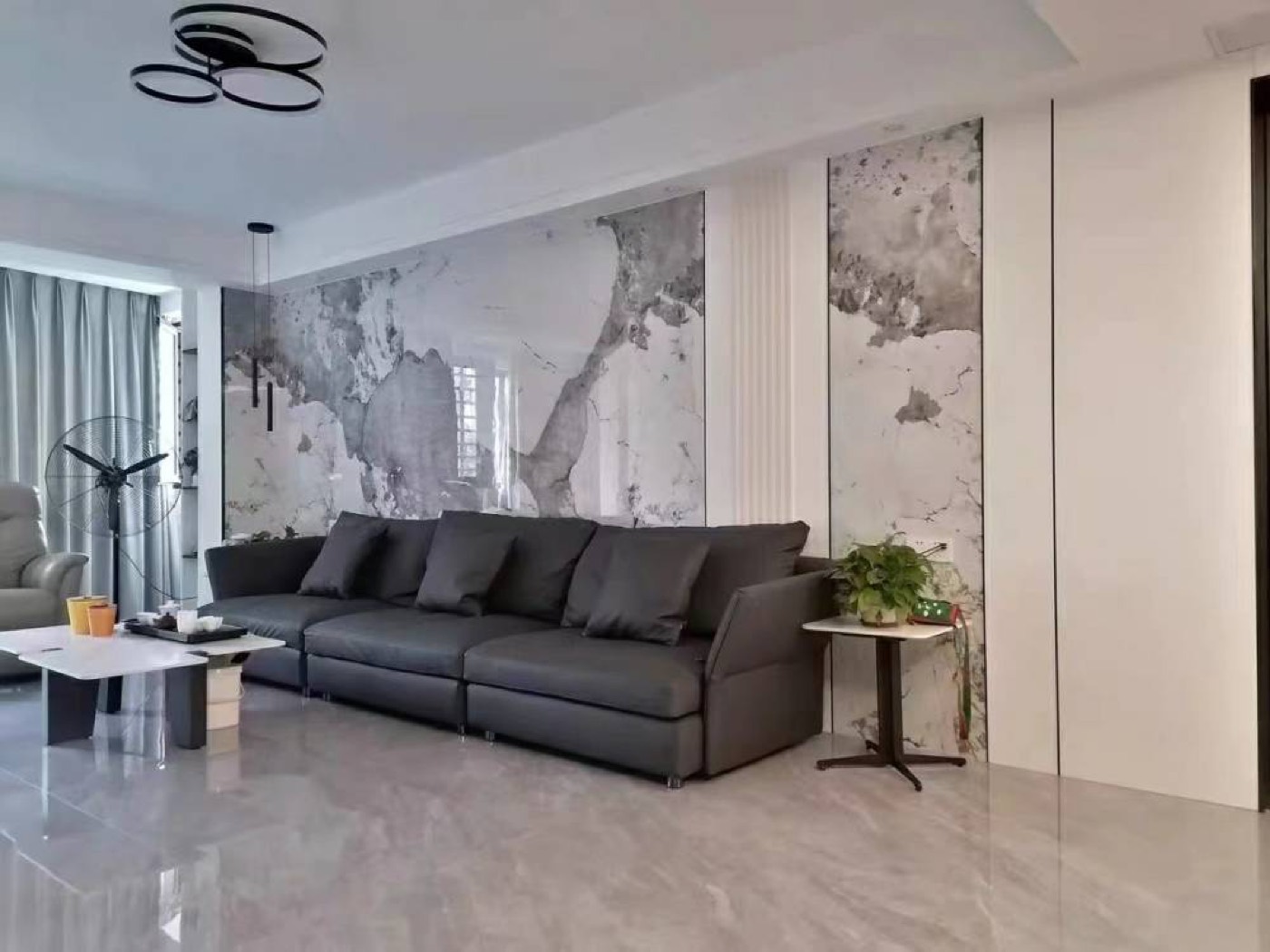
Kitchens are the room where wall panels get the most questions, because a kitchen wall does something a bathroom or bedroom wall doesn't: it sits next to an open flame or a hot cooktop surface. Buyers ask us for bathrooms and hotel corridors without hesitation, then pause on kitchens specifically because of heat. The honest answer is that panels work well for most of a kitchen wall, with one zone — the strip directly behind a gas burner — that needs a different treatment. Here's where panels fit, where they don't, and how splashback-only compares to full-wall coverage.
The Short Answer
- PVC and SPC panels are a strong fit for kitchen walls, general splashback area, and full-height coverage away from direct flame contact — 0% water absorption and a non-porous, grout-free surface handle grease and moisture better than tile.
- The zone directly behind a gas burner needs a heat buffer, since our panel cores are rated for continuous exposure up to roughly 60°C and a cooktop wall can spike well above that in the immediate burner zone during cooking.
- Most kitchens use a mixed approach: a heat-resistant strip (tile, stainless steel, or the stove hood's own shield) directly behind the burners, with panels covering the rest of the splashback and surrounding walls.
Splashback-Only vs. Full-Wall Coverage
Splashback-only coverage puts panels on the wall strip behind the counter and sink, typically 600–900 mm high, leaving the rest of the wall painted. It's the lower-cost option and matches how most tile backsplashes are already installed, so it's an easy like-for-like upgrade in a renovation. Full-wall coverage runs panels floor-to-ceiling or counter-to-ceiling across the whole kitchen wall, which costs more in material but removes paint maintenance entirely and gives a more finished, seamless look — the same full-height option covered in our installation guide, since our panels run up to 3.0 m in length without a horizontal seam.
| Factor | Splashback Strip (600–900mm) | Full-Wall Coverage |
|---|---|---|
| Material cost | Lower | Higher |
| Install time | Under a day for a standard kitchen | One day at roughly 20 m² per installer |
| Maintenance above the strip | Painted wall still needs repainting | None — panel surface throughout |
| Best fit | Budget renovation, rental turnover | New build, high-end renovation, commercial kitchen |
The Heat Question: What "60°C" Actually Means Here
Our carbon crystal and SPC panel cores are not rated for sustained contact above roughly 60°C — the same limit that rules out sauna interiors, as we've covered in our durability breakdown. A kitchen wall isn't uniformly hot; ambient heat from cooking rarely gets near that number. The exception is the small zone directly behind an open gas burner, where radiant heat from the flame itself can run far higher at close range. Our practical recommendation: keep a heat-resistant buffer — a strip of tile, stainless steel, or the cooktop hood's built-in shield — directly behind the burner zone, and use panels for the rest of the splashback and walls. This is a material-safety judgment call on our part, not a quoted building code, so also check what your local kitchen and fire code requires for cooktop wall clearance.
Grease, Moisture and Cleaning
A non-porous panel surface doesn't give grease anywhere to soak into, unlike grout lines between tiles, which trap grease and discolor within a year or two of daily cooking in a busy kitchen. Our panels wipe clean with a standard kitchen degreaser and a cloth — no sealing, no re-grouting, no scrubbing grout lines with a toothbrush. Combined with 0% water absorption, this makes panels a strong match for the splash zone around a sink as well as the cooktop wall, the same water-resistance profile we cover in more depth for bathroom applications.
Which Surface Finish Works Best in a Kitchen
Stone and marble-look SPC finishes pair naturally with stone or quartz countertops for a continuous look, and hide daily splashes better than a high-gloss finish. Wood-grain carbon crystal panels work well on kitchen walls away from the direct splash zone, adding warmth without the upkeep of real wood near moisture. Across our range we offer 8 surface families — wood, metal, mirror, fabric, stone, wave, skin-touch and more — so matching an existing countertop or cabinetry tone is usually possible without a custom order.
Cutouts and Fixtures
Kitchen walls have more going on than a bathroom wall — outlets, switches, a range hood duct, sometimes a window. Panel cutouts for outlets and switches are straightforward with standard tools during install, the same tongue-and-groove click system used across our range, but they should be cut cleanly and sealed at the edge to keep water from tracking behind the panel near the sink. Range hood ducting typically needs a dedicated access panel or trim piece rather than cutting through a single panel run — plan the layout with your installer before panels are ordered, not after.
Honest Limitation: Where Tile or Metal Still Wins
The strip directly behind an open gas burner is genuinely outside what our panels are built for — don't install panel there without a heat buffer, regardless of what a supplier's marketing claims about heat resistance. Induction and electric cooktops radiate far less heat to the surrounding wall than open gas flame, so kitchens without gas burners have fewer restrictions. We'd rather flag this zone clearly than have a customer find out the hard way after a container has landed.
Planning a Kitchen Panel Layout?
Send us your kitchen dimensions and cooktop type and we'll recommend a layout, the heat-buffer zone if needed, and a finish that matches your countertop.
Request a Quote →Frequently Asked Questions
Can PVC wall panels go behind a stove?
Not directly behind an open gas burner without a heat buffer — our panel cores aren't rated for sustained exposure above roughly 60°C, and radiant heat at close range to a flame can exceed that. Panels work fine on the rest of the cooktop wall and splashback.
Are wall panels heat resistant enough for kitchens?
Ambient kitchen heat away from an open flame is well within our panels' range. The one zone that needs a different material is the strip directly behind a gas burner, where a tile or stainless buffer is the safer choice.
Do kitchen wall panels need grout like tile?
No. Panels click together edge-to-edge with no grout line, which means no grease-trapping grout to clean or discolor over time — one of the main reasons kitchens switch from tile backsplash to panels.
Can I install panels over an existing tile backsplash?
Yes, over sound, flat existing tile using battens or adhesive, without demolition — the same approach used when installing panels over existing drywall.
How do you clean grease off wall panels?
A standard kitchen degreaser and a cloth wipe is enough — the non-porous surface doesn't need sealing or special cleaning products, unlike natural stone or grouted tile.