How to Choose a Wall Panel Supplier in China
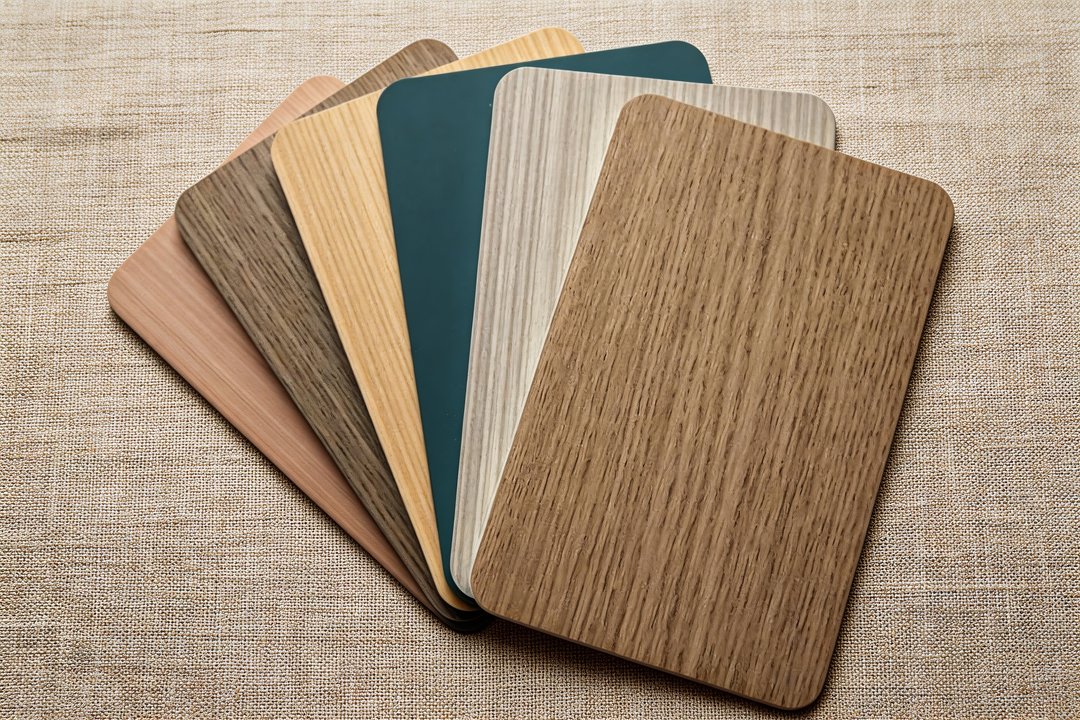
Search "wall panel supplier China" and you get thousands of listings — the same six product photos recycled across hundreds of storefronts. Some are factories. Many are trading companies reselling the same factory's output at a markup, with no ability to answer a technical question or adjust a production run. Before you commit a container's worth of budget, you need a way to tell them apart.
We manufacture PVC/carbon crystal and SPC wall panels for export, and we quote against trading-company listings every week. Here is the checklist we'd use ourselves if we were the buyer.
1. Confirm It's a Factory, Not a Reseller
This is the single highest-leverage question, because it determines every other answer: price flexibility, technical depth, MOQ, and how fast problems get fixed.
- Ask for the factory address and request a live video call on the production floor. A real manufacturer will show you extrusion lines, lamination equipment and a warehouse of raw film rolls without hesitation. A reseller will stall, send old photos, or "arrange it for next week" indefinitely.
- Ask a process question a trader can't answer — e.g. "What lamination method do you use for the wood-grain film, cold or hot?" or "What's your extrusion cycle time for an 8mm SPC board?" Factories answer in one sentence. Traders forward the question to someone else and come back a day later.
- Check the business license scope on the Chinese company registry (available via most sourcing platforms) — it will literally say "manufacturing" or "wholesale/trading."
2. Certifications and Test Reports — Ask for the Actual PDF
Every supplier's homepage claims "fire rated" and "eco-friendly." What matters is whether they can produce a third-party lab report with a report number you can verify.
| Document | What to check |
|---|---|
| Fire rating report (B1 / Class B) | Issuing lab name, report number, test standard (e.g. GB 8624), and that the tested sample thickness matches what you're buying |
| Formaldehyde / VOC emission test | Relevant for hotel and residential projects with indoor air quality requirements |
| SGS or equivalent factory audit | Confirms factory scale, headcount and export history — not just a paid certificate |
| Water absorption test | Should show 0% for genuine SPC/PVC composite boards; if a supplier can't produce this, be cautious |
Serious factories keep these on file and send them within a day. If a report request gets you a stock photo of a certificate instead of a lab PDF with a verifiable number, treat it as a red flag.
3. Product Range Depth Tells You Production Capability
A supplier that only lists 5–6 wood-grain colors is likely reselling a narrow batch, not running their own lamination line. Our own range spans 8 surface families (wood, fabric, metal, mirror, water-ripple, stone-texture, starlight, skin-touch) across 1,000+ designs, plus SPC boards in 39 colorways. That depth only exists if a factory owns the film library and lamination equipment to produce it — a trading company can't spin up a new finish on request.
Ask what customization is actually possible: custom lengths, custom film patterns (OEM), embossed grout-line spacing on SPC boards. A factory will quote a MOQ and lead time for a custom request. A reseller will say "let me check with our supplier" — another tell.
4. MOQ, Samples and Lead Time — Compare Like for Like
Low advertised MOQ is sometimes a trading-company trick: they'll accept a 50-piece order because they're buying spot stock from a factory's overrun, not committing production capacity. Ask what MOQ triggers a dedicated production run versus what's sold from existing stock — stock orders limit your color and length choices.
Always request physical samples before a container order. A legitimate factory sends free or low-cost samples within days and will happily send multiple surface families so you can bend, soak and burn-test them yourself — SPC and carbon crystal boards should show 0% water absorption and self-extinguish under a flame test.
5. Container Loading and Export Experience
Wall panels are bulky but light, so container loading efficiency directly affects your landed cost per square meter. Ask specifically:
- How many square meters do they typically load per 20 ft / 40 ft container for your chosen thickness?
- Do they consolidate mixed SKUs (e.g. SPC + carbon crystal, multiple surface families) in one container without extra handling fees?
- Can they show recent bills of lading or export records to your region?
A factory that exports weekly will answer these numbers instantly, because they load containers themselves. A trading company usually can't, because loading is subcontracted to whoever they bought the goods from.
6. Communication Speed and Technical Depth
During evaluation, note response time and whether answers come from someone who understands the product or someone reading from a script. A useful test: ask which panel — SPC or carbon crystal — suits a humid hotel corridor with mounted signage, and why. A knowledgeable factory contact will discuss density, screw-holding strength and water exposure in the same breath. A reseller will send a generic brochure.
Red Flags Checklist
| Red Flag | Why It Matters |
|---|---|
| Refuses a live factory video call | Likely no factory to show |
| Can't produce a lab report with a verifiable number | Fire/safety claims may be unverified |
| Price is far below market average | Usually means thinner core, less recycled-content control, or short-weight boards |
| Vague on container loading numbers | Signals they don't handle their own logistics |
| No willingness to send multiple samples | May be selling limited overrun stock, not a real production range |
Talk Directly to the Factory Floor
Tell us your target market, surface preference and volume — we'll send lab reports, free samples and a real container-loading plan, no reseller in between.
Request a Quote →Frequently Asked Questions
How do I verify a Chinese wall panel factory is real?
Request a live video call on the production floor, ask a specific process question (lamination method, extrusion cycle time), and check the business registration scope for "manufacturing" rather than "trading."
What's a reasonable MOQ for a first order?
It depends on whether you're buying from existing stock or requesting a dedicated production run. Ask both numbers — stock orders are lower MOQ but limit your color and length choices.
Should I always ask for samples before ordering a container?
Yes. A legitimate factory sends samples within days at low or no cost. Test water absorption and fire behavior yourself rather than relying on a brochure claim.
Why do some suppliers quote far below the market average?
Usually thinner core material, less controlled recycled content, or short-weight boards. Always cross-check the quoted thickness against the certified test sample thickness.