Wall Panel MOQ, Pricing Tiers & Container Loading Explained
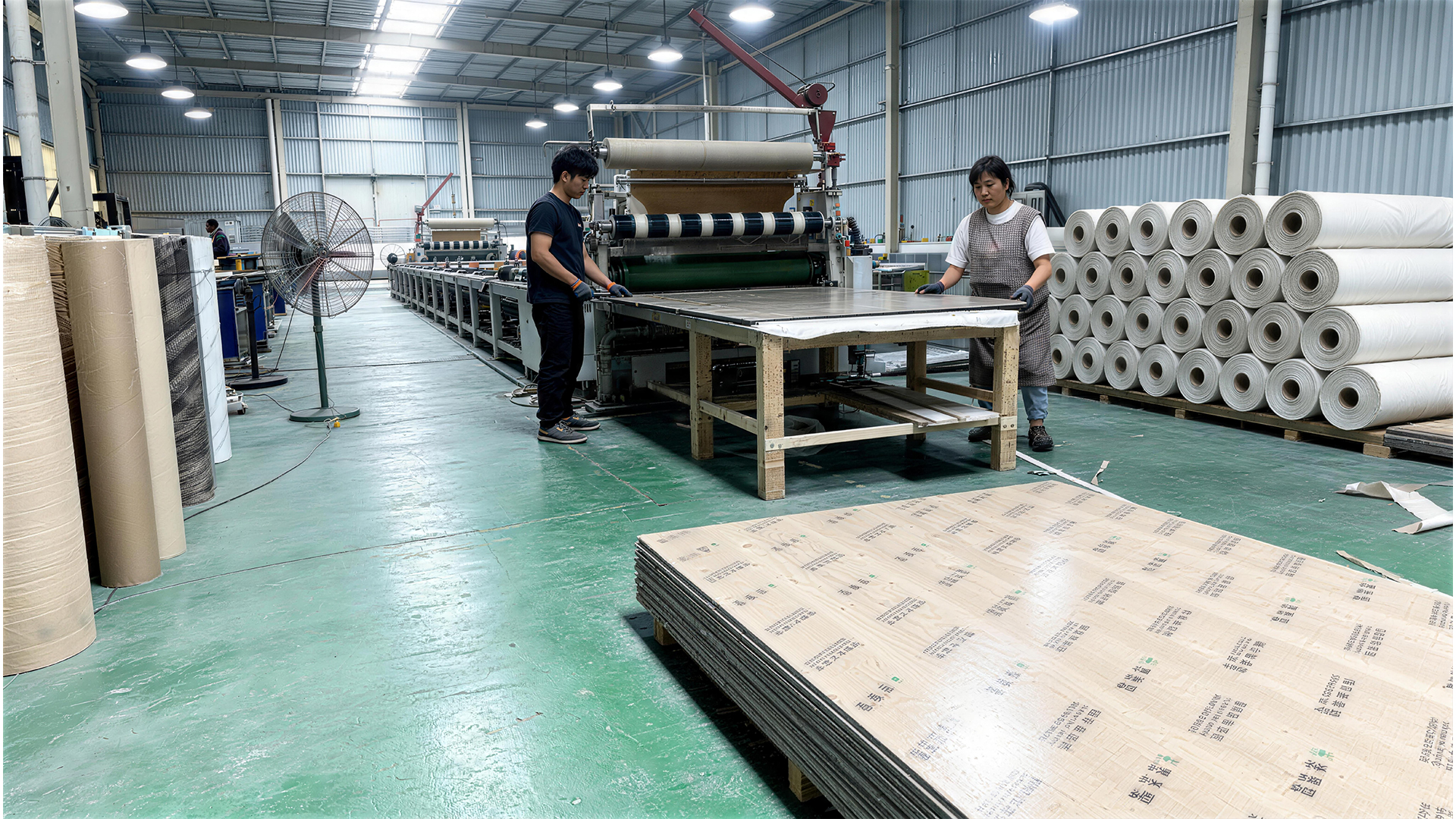
Our complete import guide covers MOQ and container loading as two steps out of eight. This article is the deep dive on just those two — because they are the numbers that actually decide your landed cost per square meter, and the ones most suppliers quote loosely.
VIGOU Panels quotes MOQ and container loading differently depending on whether you're buying from stock or requesting a dedicated production run, and by thickness, width and surface family. Here's exactly how each piece works.
What "MOQ" Actually Means for Wall Panels
MOQ for wall panels is not one number — it is two different numbers depending on where your order sits in the production cycle. Stock MOQ applies to colors and designs a factory already has on the shelf: order quantities can be small, often a single pallet, because no line changeover is required. Production MOQ applies to a color or surface film that has to be run specifically for you — this minimum is tied to how much material justifies stopping the extrusion line to load a new film or mold, not to an arbitrary piece count.
In practice, this means two importers can get two very different MOQ answers from the same factory for the same product, simply because one is buying an in-stock wood-grain finish and the other wants a custom color matched to a hotel's brand guidelines. When you request a quote, always ask for both numbers — the stock MOQ and the production MOQ — so you know which one applies to your color choice.
How Pricing Tiers Actually Work
Wall panel pricing runs on a volume ladder: the per-square-meter price drops in steps as order volume rises, because fixed costs — line setup, QC, export documentation, loading labor — get spread across more square meters. This is standard FOB pricing logic across the industry, not a factory-specific trick, so treat a supplier who won't show you the ladder as a red flag.
| Order Tier | Typical Format | Who It's For |
|---|---|---|
| Sample | 1–5 pieces, courier shipped | Soak/burn/bend testing before any commitment |
| LCL / mixed pallet | Shared container space, multiple SKUs | First market test, new distributors |
| FCL — 20 ft | Single dedicated container, ~13–14 tons | Established distributors, single-market repeat orders |
| FCL — 40 ft / 40 ft HQ | Full dedicated container, best per-m² rate | Volume buyers, multi-market distributors |
Standard payment terms across this tier structure are a 30% deposit with 70% balance before the container ships, though established relationships sometimes shift toward open account terms after several completed orders. Material also drives price independently of volume: SPC panels typically quote 15–30% above carbon crystal panels of comparable size because the limestone-composite core is denser and slower to extrude — see our full SPC vs PVC comparison for the material-level breakdown.
Container Loading — The Real Math
Container loading for wall panels is decided mainly by thickness, not by a flat "pieces per container" figure a sales rep quotes from memory. A standard 40 ft high-cube container has roughly 76 m³ of internal volume — but wall panels rarely fill that volume solidly, because stacked panels need protective packaging between layers and a stacking height limit to avoid crushing the panels underneath.
Because loading is close to volume-proportional to thickness, the relationship between our three core thicknesses looks like this:
| Product | Thickness | Relative m² per Container |
|---|---|---|
| Carbon crystal panel | 5 mm | Baseline (100%) |
| Anti-impact carbon crystal panel | 7.5 mm | ~69% of the 5 mm baseline |
| SPC panel | 8 mm | ~63% of the 5 mm baseline |
In other words, a 5 mm carbon crystal container carries roughly 60% more square meters than an 8 mm SPC container of the same footprint — the same ratio we quote in our import guide, worked out here from the thickness math directly. Width matters too: SPC panels come in 1.22 m or 0.60 m widths, and mixing both in one container without planning the pallet layout wastes floor space along the edges — align widths within a pallet run rather than mixing them loosely.
Honest limitation: these ratios are a planning estimate, not a guaranteed count. Actual square meters per container shift with your specific color/length mix, pallet configuration and the protective packaging spec you choose — ask us for the confirmed packing list for your exact SKU combination before you commit to a container size.
Mixed-SKU Containers: The Small-Order Strategy
Most first-time distributors don't need a full container of one product. Combining SPC panels for wet-area demand with carbon crystal panels for dry-area demand in a single container is the most common way to hit FCL pricing without over-committing to one product line — many of our repeat distributors have run this exact split since their first order. Keep same-width SKUs grouped on the same pallets so loaders aren't fighting mismatched dimensions, and confirm your surface-family split (wood, metal, mirror, stone, etc.) before production starts, since color changeovers are what drive the production MOQ discussed above.
When a Small Trial Order Beats a Container
If your total order is under roughly one pallet's worth — a few hundred square meters — LCL freight and inspection costs per square meter often eat into the savings that factory-direct pricing is supposed to deliver. For a genuinely small first test, a local stockist or distributor's existing inventory can work out cheaper landed than airfreighting or LCL-shipping a tiny quantity direct from China. Full-container pricing only pays off once you're ordering at container-level volume.
Get Your MOQ and Container Loading Numbers
Tell us your target thickness, colors and destination port — we'll send back stock vs production MOQ, tiered pricing and a confirmed packing list.
Request a Quote →Frequently Asked Questions
What is the MOQ for wall panels?
It depends on whether you're ordering an in-stock color (low MOQ, often one pallet) or a custom color/length requiring a dedicated production run (higher MOQ, tied to a minimum extrusion batch). Always ask for both numbers when requesting a quote.
Can I mix SPC and carbon crystal panels in one container to hit MOQ?
Yes — mixed-SKU containers combining wet-area SPC and dry-area carbon crystal panels are the standard way distributors reach full-container pricing without over-ordering one product line.
How many square meters actually fit in a 40 ft container?
It varies by thickness: roughly 60% more square meters of 5 mm carbon crystal panel fit than 8 mm SPC panel in the same container. Exact counts depend on your color mix and packaging, so request a confirmed packing list rather than relying on a rule of thumb.
Is a small trial order worth it before ordering a full container?
For a genuine market test under about one pallet's volume, yes — but at that size, LCL freight and inspection costs per square meter can outweigh factory-direct savings, so compare against a local distributor's stock before committing.
Do prices really drop at higher order volumes?
Yes — this follows standard FOB pricing logic where fixed costs (line setup, QC, documentation) spread across more square meters at higher volumes. A supplier unwilling to show a volume-based pricing ladder is worth questioning.
What payment terms are standard for a container order?
A 30% deposit with 70% balance before shipment is the industry standard for new buyer relationships; terms sometimes loosen after several completed orders with the same supplier.