Hotel Renovation with Wall Panels: The Downtime Math
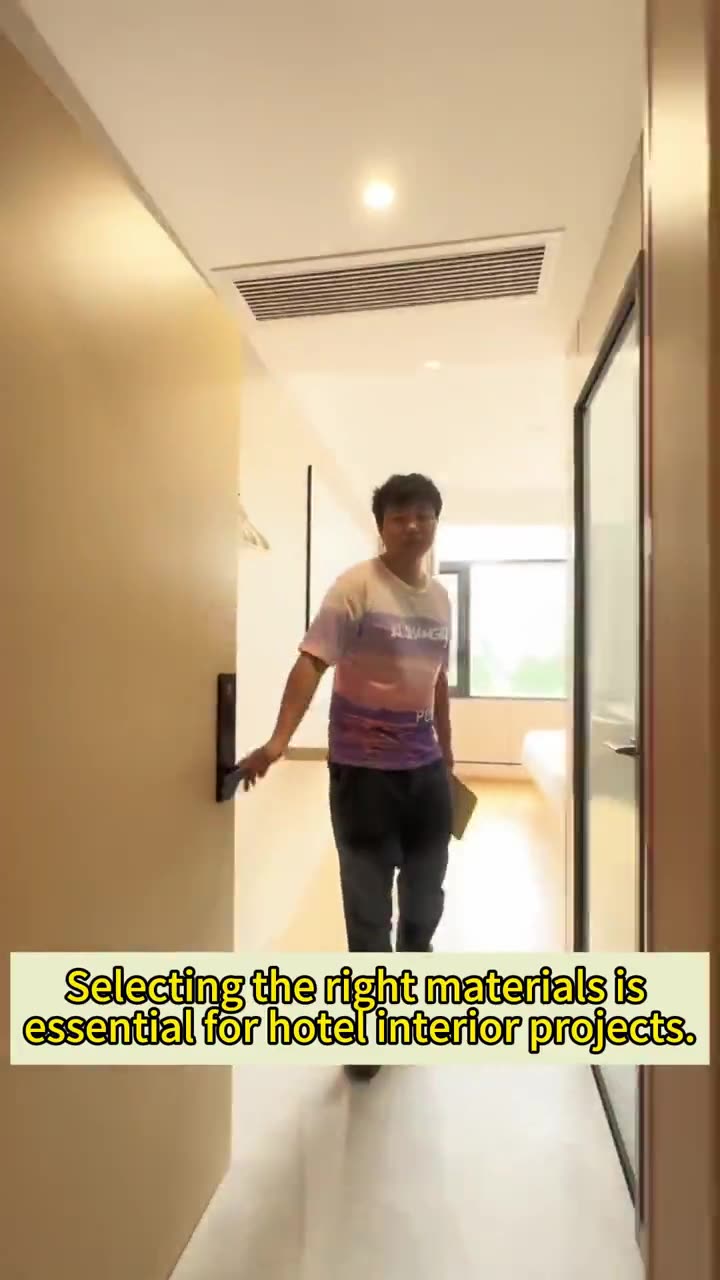
A closed hotel room costs money every single night it isn't sellable — which is why the real decision on a renovation isn't panel price versus paint price, it's room-nights lost versus room-nights lost. Wet trades (tile, plaster, multi-coat paint) all carry cure time that keeps a room dark after the crew has already left. Wall panels mostly don't. Here's the downtime math, from a factory that ships to hotel renovation projects on five continents.
The Short Answer
Wall panels typically cut hotel room renovation downtime by 30–50% compared to wet-trade finishes like tile or multi-coat paint, mainly because click-lock panels have no cure time — a room can go back into inventory as soon as the last panel and trim are fitted, not a day or two after.
Why Wet Trades Cost You Room-Nights You Don't See on the Quote
A contractor's day-rate quote doesn't show you the days a room sits empty after the crew leaves. Ceramic tile grout typically needs 24–48 hours to cure before the room can be used normally, and multi-coat paint needs drying time between coats plus ventilation before guests can occupy the room without smell complaints. None of that shows up as a labor line item — it shows up as an empty room on the booking calendar.
The Install-Speed Math
One installer covers roughly 20 m² of wall panel per day with tongue-and-groove click-lock, per our own installation guide — and because there's no grout or paint to cure, that room is usable the moment the crew finishes, not a day or two later. A typical guest room's wall area (bathroom plus an accent or full wall) commonly falls well under a single installer's daily capacity, meaning a two- or three-person crew can often finish a room's wall panels in a single day, start to finish, no return visit for a second coat or grout pass.
| Renovation Method | Typical Time to Re-Let Room | Why |
|---|---|---|
| Wall panels (click-lock) | Same day as install finishes | No grout, no paint cure — usable immediately |
| Ceramic tile | Install day + 24–48 hrs | Grout cure time before normal water use |
| Multi-coat paint / plaster | Install day + 1–3 days | Dry time between coats, off-gas/ventilation |
Running Your Own Room-Nights Math
The formula is simple: (days saved per room) × (your average daily rate) × (rooms in the renovation) = revenue recovered by switching to panels. A 60-room floor renovation that saves even 1.5 downtime days per room, at a modest ADR, recovers real money before you've counted a single dollar of labor savings — plug in your own ADR and room count rather than trusting an industry-wide number, since downtime cost varies enormously by property and season.
Panels Over Existing Surfaces Cuts Downtime Further
On a renovation over sound, flat existing tile or painted drywall, panels commonly install directly on top without demolition — skipping the noisiest, dustiest, most disruptive phase of a hotel renovation entirely. That matters twice: once for the room being worked on, and again for neighboring occupied rooms that don't have to tolerate demolition noise during a same-floor renovation.
Corridors and High-Traffic Zones Need the Right Grade
Guest corridors take daily impact from luggage carts, housekeeping trolleys and swung doors that a standard guestroom wall never sees. Our 7.5 mm anti-impact grade — covered in detail in our panel durability guide — is built specifically for that load, and all our panels carry a B1 flame-retardant rating, which is typically a baseline requirement for hotel corridor and guestroom wall finishes; confirm the exact fire code your jurisdiction and insurer require before specifying.
Phasing a Multi-Floor Renovation
Most hotel groups run panel renovations floor-by-floor during low-occupancy windows rather than closing the property, since a panel crew's noise and disruption footprint is small enough to contain to one floor at a time. A common sequence: corridors and back-of-house first (proving install speed and finish quality on lower-visibility areas), then guest rooms floor by floor, saving public-facing lobby and restaurant walls for last once the crew has a full rhythm on the property's specific layout. This lets a property keep selling the untouched floors at full rate throughout the project instead of losing the whole building's revenue at once.
Order lead time is the constraint that actually sets your rollout pace, not install speed — production and container shipping for a multi-floor quantity commonly runs several weeks before the first panel reaches site, so the renovation schedule should be built around confirmed lead time from your supplier, not around how fast a crew can install once material arrives.
Honest Limits: What Slows a Multi-Floor Rollout
The one thing that catches hotel groups off guard isn't installation speed — it's dye-lot variation. Wood-grain and stone-look surface finishes can show a slight color or texture shift between separate production batches, the same way natural stone or timber does. For a single-floor pilot that's rarely noticeable, but for a 200-room, multi-floor rollout running over several months, we recommend ordering the full project quantity in one production run rather than reordering the same SKU later — it's the one honest caveat that saves a property manager an awkward mismatch on floor six.
Plan a Multi-Floor Renovation Timeline
Tell us your room count, corridor length and target completion date — we'll quote lead time, container loading and the grade mix for guestrooms vs corridors.
Request a Quote →Frequently Asked Questions
Can a hotel stay open during a wall panel renovation?
Yes — because panels don't need cure time and can often go directly over existing surfaces, hotels commonly renovate floor-by-floor or room-by-room during low-occupancy windows without closing the property.
How long does it take to panel one hotel room?
A small crew can commonly finish a standard guest room's wall panels in a single day, since one installer covers roughly 20 m²/day and there's no grout or paint drying time afterward.
Do wall panels meet hotel fire code requirements?
Our full range carries a B1 flame-retardant rating, which is typically a baseline for hotel interior wall finishes — always confirm the specific code requirement with your local authority or insurer before specifying a project.
Can panels be installed directly over existing hotel wallpaper or tile?
Often yes, if the existing surface is sound, flat and firmly bonded — this skips demolition and is one of the biggest time and cost savings on a renovation versus a full tear-out and retile.
What grade of panel is right for hotel corridors vs guest rooms?
Corridors and other high-traffic zones should use 7.5 mm anti-impact grade for daily cart and trolley impact; standard guestroom walls can use 5–7.5 mm standard grade, and bathrooms should use 8 mm SPC for the wet zone.
How far in advance should we order for a multi-floor renovation?
Build the schedule around confirmed production and shipping lead time, not install speed — for a multi-floor quantity that commonly means ordering several weeks ahead of your first renovation phase, and ordering the full project quantity in one run to avoid dye-lot mismatches between batches.