High-End PVC Panel Finishes That Don't Look Like Plastic
"Do PVC panels look cheap?" shows up constantly in renovation forums, and it's a fair question — a flat glossy print over thin plastic sheet does look like plastic, because it is basically just plastic with a picture on it. That is not what separates a budget panel from a specification-grade one. The difference is entirely in the surface technology, and it's worth understanding before you assume "PVC panel" automatically means "looks fake."
VIGOU Panels runs eight distinct surface families across our carbon crystal line alone, plus carved grout-line options on SPC panels, specifically because flat-print finishes are the thing buyers reject on sight in a showroom.
The Short Answer
PVC and SPC panels stop looking like plastic when the surface texture is physically registered to the printed pattern — grain, pores or grout lines you can feel under your fingers exactly where the print shows them — rather than a smooth glossy layer printed over a flat sheet. That single manufacturing detail is what separates a finish that reads as real wood, stone or fabric from one that reads as a photo of wood, stone or fabric.
Why Cheap Panels Look Like Plastic
Cheap panels look like plastic because the surface is a flat, smooth, high-gloss print layer with no texture underneath it — light bounces off it evenly in a way no natural material does, and your eye reads that uniform sheen as "coating" before you've consciously registered why. Wood, stone and fabric all have irregular micro-texture that scatters light unevenly; a flat-printed panel can't replicate that no matter how sharp the printed image is. This is the single most common complaint we see repeated across renovation and DIY communities, and it's a legitimate one about a real category of low-end product — not a myth to argue away.
Register Embossing: Texture That Matches the Print
Register embossing presses a physical texture into the panel surface that is precisely aligned to the printed pattern beneath it — a wood grain line is slightly raised or recessed exactly where the print shows a grain line, so your fingers and your eyes agree on where the texture is. Off-register or unregistered embossing (texture and print misaligned, or texture applied uniformly regardless of the pattern) is a hallmark of lower-tier production, and it's one of the fastest tells in a showroom once you know to run a hand across the surface diagonally.
Skin-Touch Finish: The Sensory Upgrade
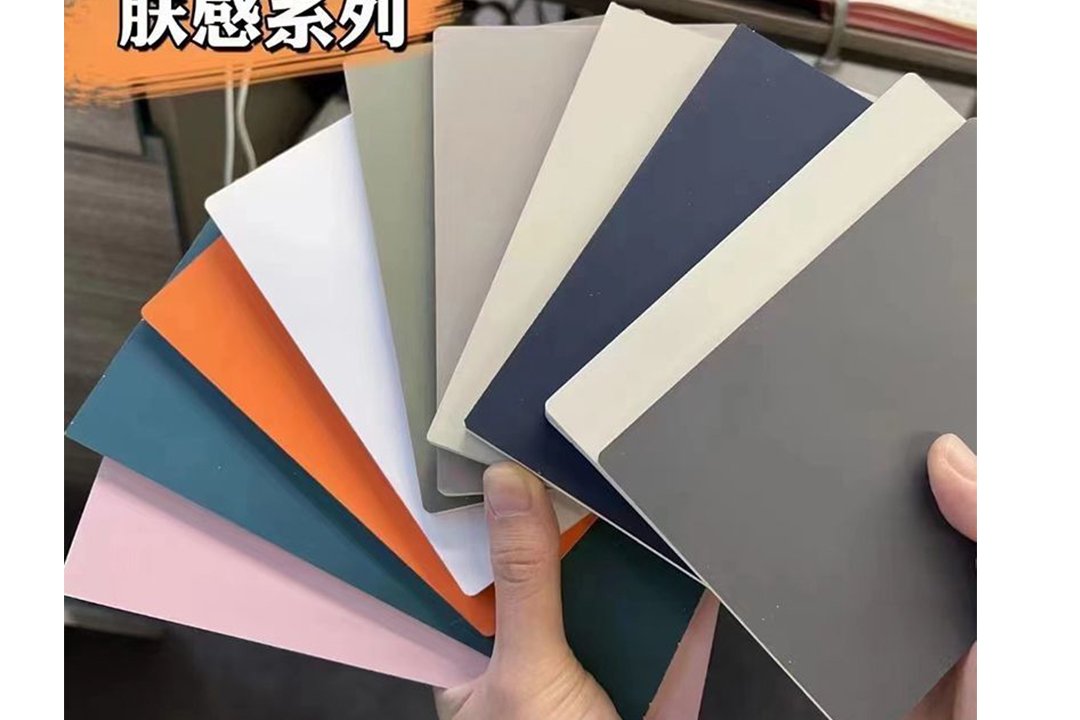
Skin-touch finish is a soft, matte, slightly warm-to-the-touch surface texture — one of our eight carbon crystal surface families alongside wood grain, fabric weave, metallic, mirror, wave, rock and starry-sky finishes — engineered specifically to remove the cold, hard, "plastic" feel that a high-gloss surface gives off on contact. It's the finish spec'd most often for hospitality corridors, spa walls and salon interiors, where guests touch the wall in passing and a warm matte surface reads as considered design rather than a budget material.
Honest limitation: matte skin-touch surfaces show fingerprints, scuffs and cleaning marks more visibly than a high-gloss finish in high-contact areas like elevator lobbies or stair handrail walls — for those specific high-touch zones, a lightly textured satin finish sometimes outperforms full matte on maintenance, even though skin-touch wins on first impression.
Carved Grout Lines: Making SPC Read as Stone or Large-Format Tile
Carved grout lines are physically routed grooves cut into an SPC panel's surface at tile-module spacing, so a single large panel reads visually as multiple pieces of stone or ceramic tile rather than one continuous sheet. Our SPC line offers grout-line spacing in 300×600 mm, 150×400 mm, 200×800 mm and 100×300 mm modules, plus a no-groove option for buyers who want the seamless-stone look instead. Combined with one of our 39 SPC color patterns — including marble-look, cement-look and stone-texture designs — a carved-groove panel installed correctly is difficult to identify as anything other than tiled stone from normal viewing distance.
| Finish Family | What It Replicates | Best-Fit Use |
|---|---|---|
| Skin-touch | Soft matte fabric/leather feel | Hospitality corridors, spa, salon walls |
| Wood grain | Timber panelling | Residential living areas, offices |
| Fabric weave | Textile wallcovering | Offices, boutique retail |
| Metallic (brushed) | Brushed metal panel | KTV, bars, statement feature walls |
| Mirror | Polished mirror surface | Salons, entryways, small-space visual expansion |
| Rock / stone texture | Natural stone surface | Feature walls, commercial lobbies |
| Carved-groove SPC | Large-format tile or stone modules | Bathrooms, kitchens, wet-area walls |
Metallic and Mirror: Where Finish Alone Sets the Mood
Metallic and mirror finishes are the two surface families that don't try to imitate a natural material at all — they're specified precisely because a brushed-metal or mirrored wall is a statement no natural material delivers as cleanly at this price point. We cover the venue-by-venue logic for these two finishes in more depth in our commercial wall panel guide; the short version is that mirror finish visually expands tight interiors and brushed metal reads as intentionally modern rather than budget, provided the brushing texture is fine enough to avoid a cheap chrome-sticker look.
Honest Limits: Where High-Gloss and Mirror Finishes Struggle
Mirror and high-gloss metallic finishes show fine scratches and fingerprints more readily than any matte or textured finish in this lineup, simply because a perfectly flat reflective surface has nowhere to hide a mark. For a heavily trafficked hallway or a wall guests touch constantly, we'd steer a buyer toward skin-touch or a lightly textured metallic over full mirror gloss — the visual impact difference in photos is smaller than it looks, and the maintenance difference in daily use is larger.
See the Finish Before You Order
Tell us the look you're after — stone, wood, fabric or metal — and we'll send matching samples across our finish families so you can feel the texture difference yourself.
Request a Quote →Frequently Asked Questions
Do PVC panels look cheap or fake?
A flat, glossy, unregistered-print panel does — that complaint is legitimate for that category of product. A panel with register-embossed texture aligned to the print, like our skin-touch, wood-grain or carved-groove SPC finishes, reads as the natural material it's replicating rather than a photo of it.
What is skin-touch finish on a wall panel?
A soft, matte, slightly warm surface texture — one of our eight carbon crystal finish families — engineered to remove the cold, hard feel a glossy plastic surface gives on contact. It's commonly specified for hospitality and spa interiors.
Can PVC or SPC panels really look like real tile or stone?
Yes, closely — carved-groove SPC panels with routed grooves at 300×600, 150×400, 200×800 or 100×300 mm module spacing combined with a stone or marble-look print pattern are difficult to distinguish from tiled stone at normal viewing distance.
Which finish shows scratches and fingerprints the least?
Matte and textured finishes like skin-touch, wood grain and carved-groove SPC hide marks far better than mirror or high-gloss metallic finishes, which show every scratch and fingerprint on a perfectly flat reflective surface.
How many surface finish options are available?
Our carbon crystal line offers eight surface families — wood grain, fabric weave, metallic, mirror, wave, rock, starry-sky and skin-touch — plus 39 SPC color patterns with optional carved grout-line spacing.