Types of Shower Wall Panels: SPC, PVC, Acrylic & Solid Surface Compared
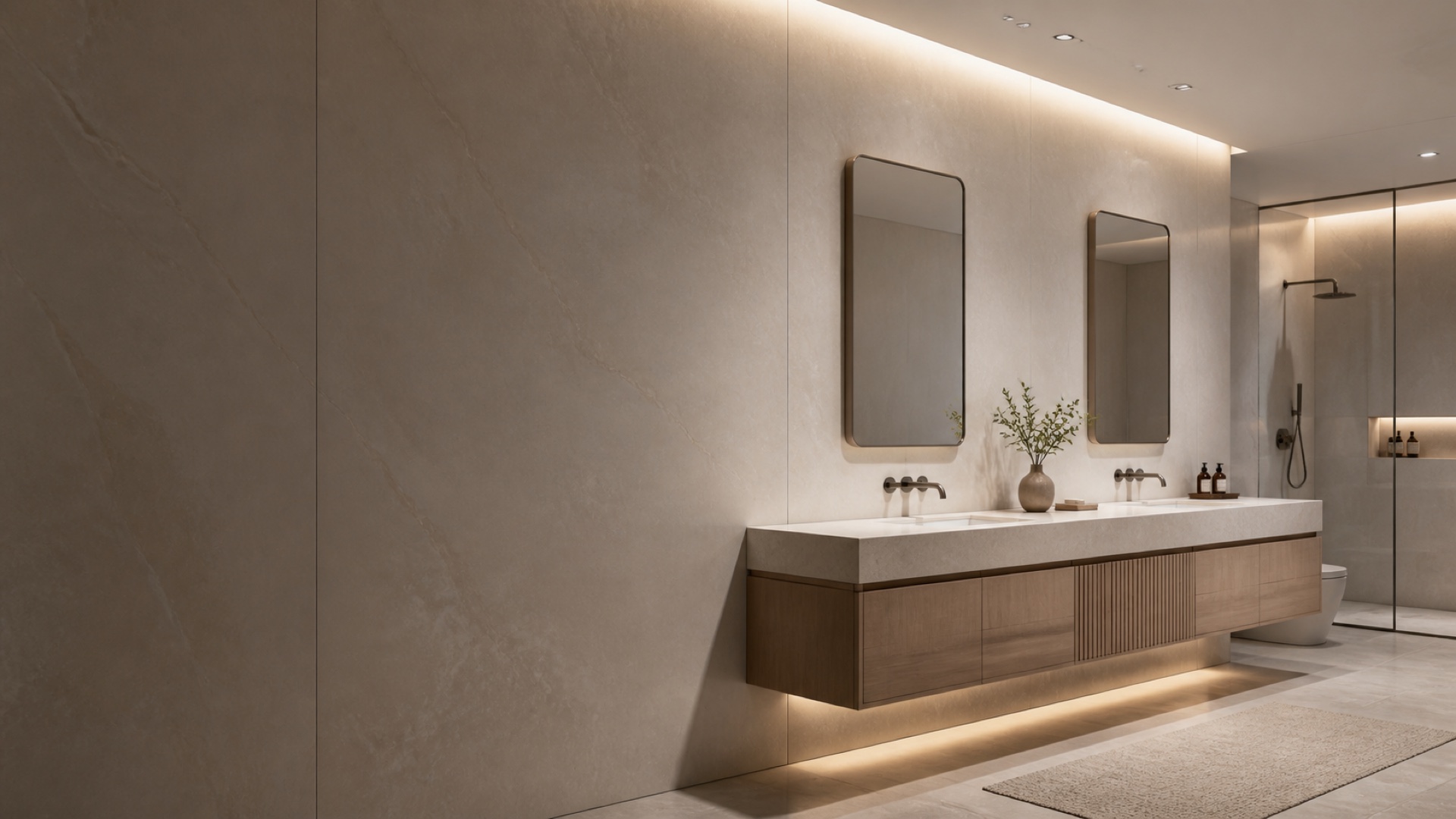
The shower wall panel market splits into four core materials: SPC, PVC, acrylic and solid surface. Each one dominates a different price bracket and use case, and each one behaves differently in an import container, on a distribution shelf, and during installation. If you're sourcing for the first time or trying to work out why the product you bought last time keeps coming back as a complaint, this breakdown should answer it.
Quick note on what this article is not: a tile guide. Ceramic and porcelain tiles are still the most common bathroom wall finish globally, but they're a different category. What we cover here are panel products — large sheets that go up without grout, often over existing tiles.
The Short Answer
| Type | Core | Typical thickness | Tile-groove possible? | Best fit |
|---|---|---|---|---|
| SPC | Limestone + PVC composite | 3–7 mm | Yes (CNC) | Shower & wet rooms, tile overlay, hotels |
| PVC | PVC foam or rigid PVC | 5–10 mm+ | No (decorative film) | Dry interior walls, bedrooms, living areas |
| Acrylic | Thermoplastic acrylic | 3–5 mm | No | Shower surrounds, smooth-gloss look |
| Solid surface | Mineral-resin composite (e.g. Corian-type) | 6–12 mm | No standard product | High-end custom vanities, luxury bathrooms |
SPC Shower Wall Panels
SPC stands for stone plastic composite. The core is a mixture of limestone powder and PVC binders, pressed and extruded into a dense, rigid board. That density is what makes it different from most other panel types: it doesn't flex like a standard PVC sheet, it doesn't scratch as easily as acrylic, and because it's waterproof through its full thickness, it doesn't need any secondary waterproofing treatment behind it.
The surface of an SPC board can be CNC-machined into groove patterns that mimic real tile layouts — subway, herringbone, chevron, hexagon, mosaic, large-format grid. This is why SPC has become the main factory product for importers who want to offer a tile look without the installation complexity of ceramic tiles. The grooves are cut into the face of the board, not a separate adhesive layer, so they don't come loose in a steam shower.
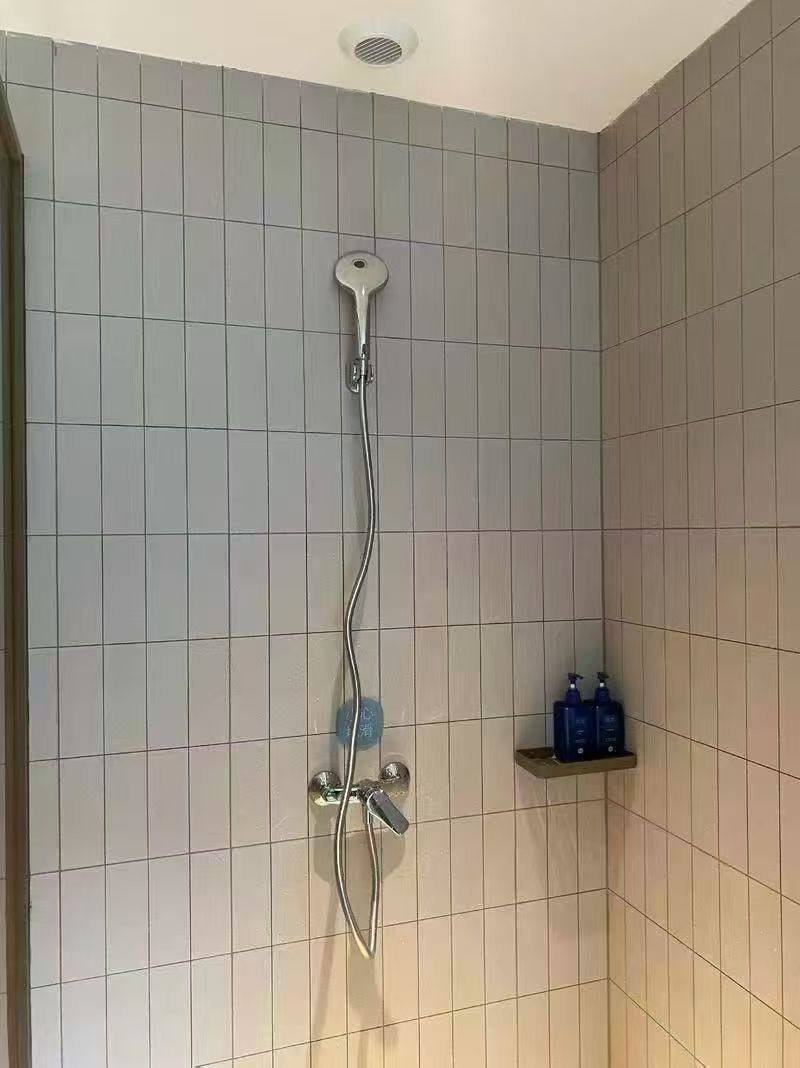
Thicknesses run from 3 mm up to 7 mm. The thinner boards (3–4 mm) are popular for tile overlay renovations — they add very little build-up over existing ceramics, so shower doors and fixtures usually still close correctly. The thicker boards (5–7 mm) go on bare walls and new construction.
Sheet sizes vary, but the most common are 600 mm and 1,220 mm widths, with lengths from 2,440 mm up to 3,000 mm. The 1,220 mm width covers the standard 4×8 ft format many markets expect. Because the sheets are large, most shower enclosures take one or two panels per wall with almost no visible seams — which is a strong selling point compared to ceramic.
From a sourcing angle, SPC shower panels are the category that has seen the most factory investment in China over the past decade. Colour ranges are broad — tile effects in grid, stacked and mosaic patterns, marble effects in dozens of colours, stone and terrazzo surfaces. Our own waterproof shower wall panels run to 42 designs across tile, marble, stone and terrazzo families, and those can share one container, which makes it easier to stock a range without splitting shipments.
PVC Shower Wall Panels
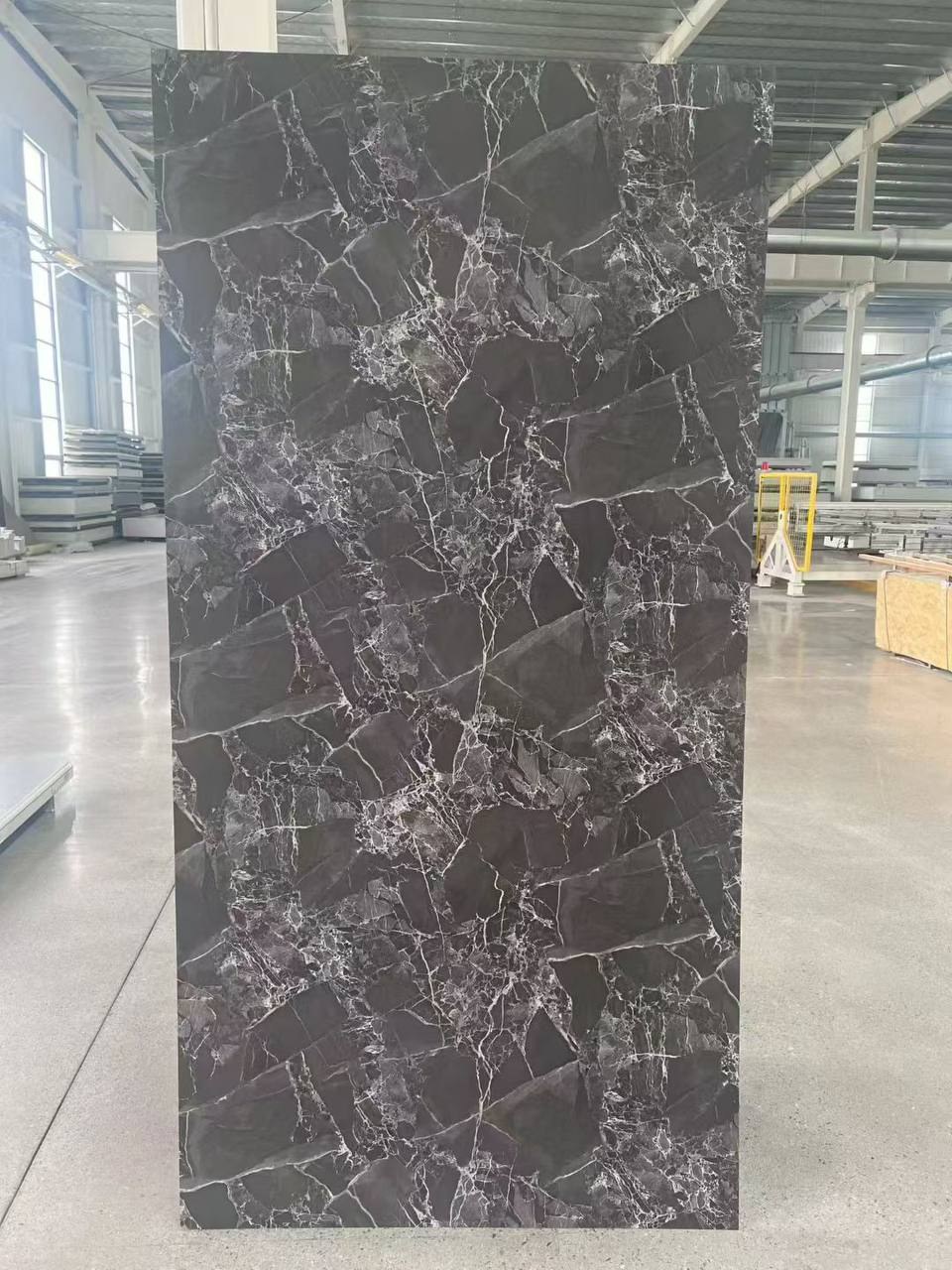
PVC wall panels cover a lot of different products that share one material but not much else. The traditional PVC panel sold in the UK and Australian market for ceilings and bathroom walls is a hollow-core extruded profile, tongue-and-groove, usually around 250–375 mm wide. The PVC flat sheets common in India and Southeast Asia are a different animal: solid or foam-core PVC boards with a printed or laminate surface, 1,200 mm wide and 2,400–2,800 mm long.
Neither type is as rigid as SPC. Standard PVC foam boards flex noticeably on a large span, which is fine on a wall with solid backing, but it makes them unsuitable for overlay over uneven tiles where the backing is patchy. The surface is typically a decorative film — a printed PET laminate that gives the marble or wood-grain look. That film can't be grooved the way SPC can, so PVC panels are almost always smooth sheets with no texture beyond the printed pattern.
Where PVC panels win is in dry interior applications: bedroom feature walls, living room cladding, office fit-outs. They're lighter than SPC, faster to cut with a utility knife, and the visual range for marble-effect finishes is good. For bathroom use, some PVC products are marketed as moisture-resistant, and the near-zero water absorption of a dense PVC core does mean they handle condensation fine. But thin or foam-core PVC boards will swell and delaminate if water gets behind them in a shower — something SPC, being solid through its thickness, is far less prone to.
If your buyers are interior contractors who do bedrooms and living rooms as much as bathrooms, stocking PVC wall panels alongside SPC makes sense. If they're bathroom-only installers, SPC is usually the cleaner recommendation.
Acrylic Shower Panels
Acrylic shower panels are thermoplastic sheets, typically 3–5 mm thick, most often sold in smooth gloss finishes. They're lightweight and have a high-gloss surface that looks clean and contemporary. The main limitation is the material itself: acrylic is softer than SPC or ceramic, so it scratches with abrasive cleaners, it can discolour over years of use, and it can't be grooved into tile patterns.
In markets where acrylic panels are common — parts of the UK, Australia and North America — they tend to be positioned as a mid-market product between standard PVC cladding and ceramic tiles. Installation is adhesive-based, similar to SPC. Some products have matching corner and edge trims. As a comparison point for importers: if your target buyers are already familiar with acrylic products and asking for a tile-look alternative, SPC is the logical upgrade in that conversation.
Solid Surface Shower Panels
Solid surface is a cast composite material — typically an aluminium trihydrate and acrylic or polyester resin blend. Products sold under names like Corian, Hi-Macs or similar are examples of this category. Solid surface is used at the premium end of custom bathroom installations: vanity surrounds, feature walls, shower enclosures in hotel suites.
It's genuinely versatile: seamlessly joinable, thermoformable into curved shapes, repairable by sanding, available in matte and satin finishes. What it costs is weight, complexity, and fabrication. Solid surface panels are usually cut and fitted by specialist fabricators, not standard tile contractors. For an importer in the mid-market, it's a comparison reference rather than a stocking category.
What Matters Most for an Importer or Distributor
When buyers ask "what type of shower wall panel should I stock?", the material question is really three questions in one: what does your market's installer know how to fit, what does your market's end buyer recognise as a quality finish, and what can you get in a 20-foot container without it arriving damaged?
On the installation side: SPC and standard PVC adhesive-install products both work with the same general contractor who would lay tiles or hang drywall. Neither requires specialist fabricators. Acrylic is similar. Solid surface is different — plan for a narrower installer base.
On finish recognition: tile patterns carry across all markets because buyers recognise what a subway tile or a herringbone looks like. SPC's ability to replicate those patterns in a no-grout product is its core value proposition. Marble and stone smooth-surface finishes (available in both SPC and PVC) are also strong. Plain white gloss acrylic is market-dependent — common in the UK trade, less standard elsewhere.
On shipping: SPC and PVC flat sheets pack flat and dense, which keeps freight efficient per square metre. The 1,220 × 2,440 mm standard format fits neatly into containers with standard pack sizes. Acrylic and solid surface at the same dimensions are heavier per unit and have higher breakage risk without custom packing — something to factor into landed cost.
One decision-shortcut that works for most importers entering the category: start with SPC tile-effect panels in the 3–5 mm range. They ship well, they install over existing tiles, they give buyers the tile look without grout, and the design range is wide enough to cover most project types. Add a marble-effect range once you understand what your market's contractors and specifiers ask for most.
Sourcing Shower Wall Panels? Let's Talk.
Tell us your target market, the tile or marble look you need, and your destination port. We'll suggest formats and send samples before you commit to a container.
Request Samples & a Quote →Frequently Asked Questions
What are shower wall panels made of?
The most common core materials are SPC (stone plastic composite, a mix of limestone powder and PVC), standard PVC, acrylic, and solid surface compounds. SPC and PVC both come as large flat sheets. Acrylic panels are thermoplastic and are usually smooth. Solid surface is a cast material used for high-end custom bathroom installations.
What is the difference between SPC and PVC shower wall panels?
SPC panels have a denser, more rigid core made from limestone powder bound with PVC, so they can be CNC-grooved into tile and mosaic patterns and handle the humidity of a shower or wet room every day. Standard PVC panels are lighter and mostly used in dry living areas, though some PVC products are sold for bathroom use. SPC is the more robust choice for a shower enclosure.
Are acrylic shower wall panels better than SPC?
Acrylic panels are lightweight and come in smooth, glossy finishes, but they are thermoplastic and can scratch or yellow over years of use. SPC is denser, harder and can be surface-grooved into tile patterns that acrylic cannot replicate. For importers who need a tile-look product without grout, SPC is usually the better fit.
Can shower wall panels go over existing tiles?
Yes. SPC boards in the 3–7 mm range are frequently used as an overlay over old ceramic or porcelain tiles. The thin profile adds minimal build-up to the wall, so doors and fixtures usually still close and fit correctly. The wall condition and tile adhesion should be checked before overlaying.